A Tree Stripped of Its Leaves

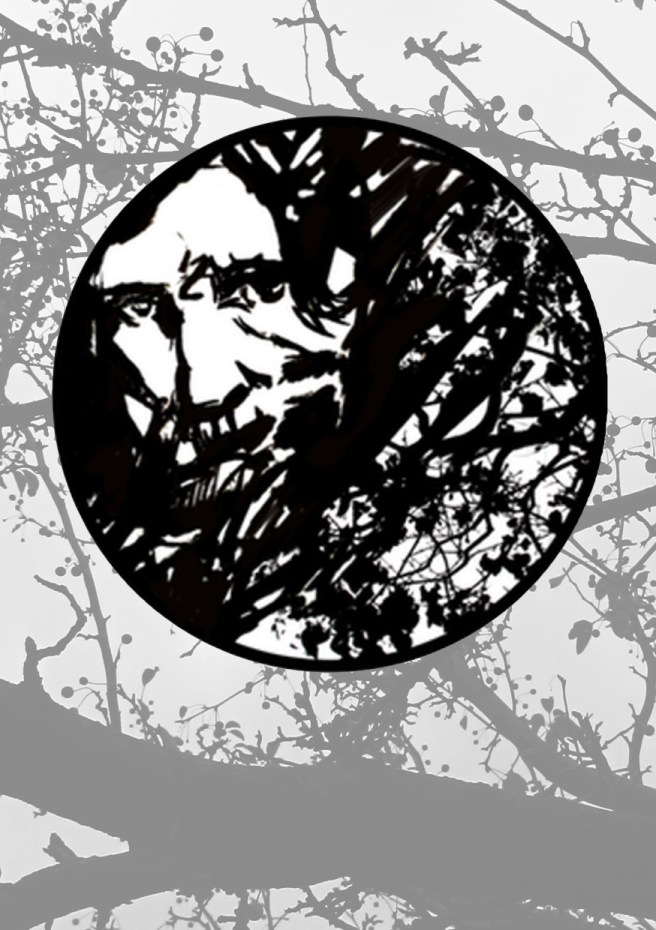
I love that Brother Lawrence’s conversion was accomplished through nothing more than noticing a tree stripped of its leaves in winter.  He is like the Zen master who reaches enlightenment when a tile falls off the roof.  Of course, for Brother Lawrence the tree is an image of resurrection – the repeated nature of resurrection and, necessarily, the repeated nature of death.  But instead of leading Brother Lawrence to a lifelong exploration of this ongoing process of death and resurrection, the tree stripped of its leaves mainly leads him to look for God in all things and all moments, most particularly mundane things and moments.  This is enough for Brother Lawrence, this continual call and exploration of what it means to pay attention and stay in communion with God.

Here is the text that accompanies this prayer card:

During that winter, upon seeing a tree stripped of its leaves and considering that within a little time the leaves would be renewed and after that the flowers and fruit appear, Brother Lawrence received a high view of the Providence and Power of God which has never since been effaced from his soul… He said we ought to quicken and enliven our faith. It was lamentable we had so little. Instead of taking faith for the rule of their conduct, people amused themselves with trivial devotions which changed daily. He said that faith was sufficient to bring us to a high degree of perfection. We ought to give ourselves up to God with regard both to things temporal and spiritual and seek our satisfaction only in the fulfilling of God’s will. Whether God led us by suffering or by consolation all would be equal to a soul truly resigned.

Practicing the Presence of God

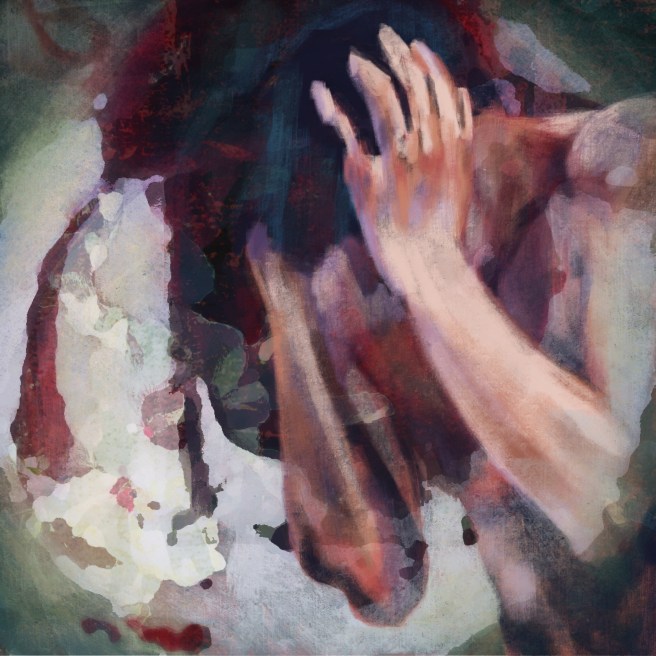
I have been working on a series of images to accompany Brother Lawrence’s Practicing the Presence of God.  Here in the Diocese of Southern Ohio, we’re planning a series of retreats that are based on Brother Lawrence’s life and letters.  It has been a joy to spend so much time with this great saint and mystic, a man of profound humility and simplicity.  I’ve created a chapbook that contains a transliteration of the whole text of Practicing the Presence of God, and twenty-eight images.  I’ve also created prayer cards with the quotes and images that I like the best.  They’re meant for use during times of private devotion.  In the following days I’ll be putting up separate posts featuring these cards, with some commentary.

Moses and the Thorns

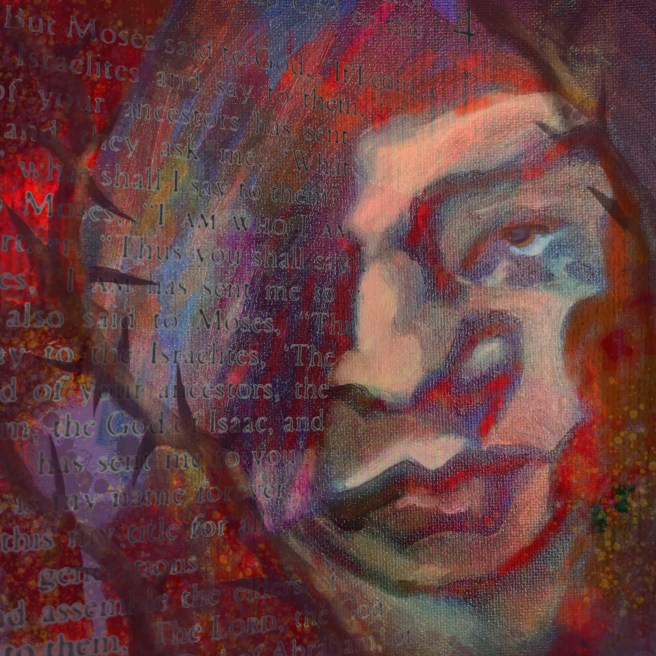
Since I started work on the Exodus Big Read with my friends in the Diocese of Southern Ohio, I’ve been struggling to make a good piece of art that depicts Moses and the Burning Bush.  The story is at once too small and too huge.  Too small because there’s not a lot of action – there are only two persons present, Moses and God, and all they’re doing is talking.  But too large because it’s a theophany – the nature of God is being revealed.  Something beyond image and language is happening to Moses, and he’s being transformed by it.  How do you depict that?

I’m not sure that this attempt is any more successful than the previous images I’ve made. But I learned from my friend, Rabbi Daniel Bogard, that in Judaism its traditional to think of the burning bush as a thorn bush.  You can’t put your hand into it without being grabbed by the thorns.  Once you engage with it, you’re snagged.  Hearing that, I realized that this must, in part, be what’s happening to Moses.  He’s trapped by his contact with the divine.  This resonated with me because I, too, feel entangled with the divine.  My own theophanies haven’t necessarily led to clarity about the nature of the sacred or of the profane, nor do I have any better idea how to respond to either.  But they have snared me in the questions – big, ultimate questions that I can’t stop asking.  For me, in this moment, Moses’s contact is less with fire than with thorns, and I hope that this image reflects that.

Out of the Depths

I first encountered the 130th Psalm when I took a class entitled Exile & Pilgrimage at Kenyon College.  Don Rogan, my professor, who later became my friend and mentor, had us read Oscar Wilde’s De Profundis, the desperate letter to his lover that he wrote while imprisoned for sodomy.  Wilde’s small book takes its name from the Latin title of the psalm.  It was one of the best things I read that year, or maybe any year, of college.

The 130th Psalm is one of the Psalms of Ascent, the group of psalms that Jews sang while on pilgrimage to the temple in Jerusalem.  These fifteen psalms (120-134) might be expected to be praise songs, since the people singing them were on their way to worship God.  But they’re not.  In these psalms, the people laid bear their souls – all of the pain they felt towards each other, all of the grievances, all of the disappointments.  In our culture, we rarely sing sad songs together, let alone songs that are full of complaints against our neighbors.  I find it odd to think of a group of pilgrims walking together and expressing the struggles of their communities in song.  But that’s what they did.

Of the fifteen Psalms of Ascent, the 130th is my favorite, in part thanks to Oscar Wilde, but also because I find it the most intense, the most raw.  I hope that the piece I made reflects that rawness.

Here’s Nan Merrill’s transliteration of the psalm:

Psalm 130

Out of the depths I cry to You!
In your Mercy, hear my voice!
May you be attentive to the
voice of my supplications!

If You should number the times we
stray from You, O Beloved,
who could face You?
Yet You are ever-ready to forgive,
that we might be healed.

I wait for You, my soul waits,
for in your Love I would live;
My soul awaits the Beloved
as one awaits the birth
of a child, or
as one awaits the fulfillment
of their destiny.

O sons and daughters of the Light,
welcome the Heart of your heart!
Then you will climb the Sacred
Mountain of Truth;
You will know mercy and love
in abundance.
Then will your transgressions be
forgiven; and you will know
the Oneness of All.

From Psalms for Praying © 2007 Nan C. Merrill, Continuum International Publishing Group, www.PsalmsForPraying.com

From the Dark Tower

“We shall not always plant while others reap.” This is the first line of Countee Cullen’s poem “From the Dark Tower.” I first read the poem last year, during the election and after having been active in the #BlackLivesMatter movement. Cullen wrote the poem at the height of the Harlem Renaissance in the 1920s. The Dark Tower itself was a building in Harlem where writers and intellectuals frequently met. As I read it, I wondered why it is that, ninety years later, the plaintive hope of the poem still seems so distant.

Cullen’s poem helps me remember, as I read the Book of Exodus, that the forty years the Israelites wandered in the wilderness is as nothing compared to the centuries that African-American people have been waiting for justice. Yet it’s the poem’s hope that most deeply effected me when I first read it. I made this image to reflect that hope, and the question that lingers behind the hope: how long must people wait for justice? In Cullen’s words, how long must people “wait, and tend our agonizing seeds”? Here’s the whole text of the poem:

From the Dark Tower

Countee Cullen

We shall not always plant while others reap
The golden increment of bursting fruit,
Not always countenance, abject and mute
That lesser men should hold their brothers cheap;
Not everlastingly while others sleep
Shall we beguile their limbs with mellow flute,
Not always bend to some more subtle brute;
We were not made eternally to weep.

The night whose sable breast relieves the stark
White stars is no less lovely being dark,
And there are buds that cannot bloom at all
In light, but crumple, piteous, and fall;
So in the dark we hide the heart that bleeds,
And wait, and tend our agonizing seeds.