
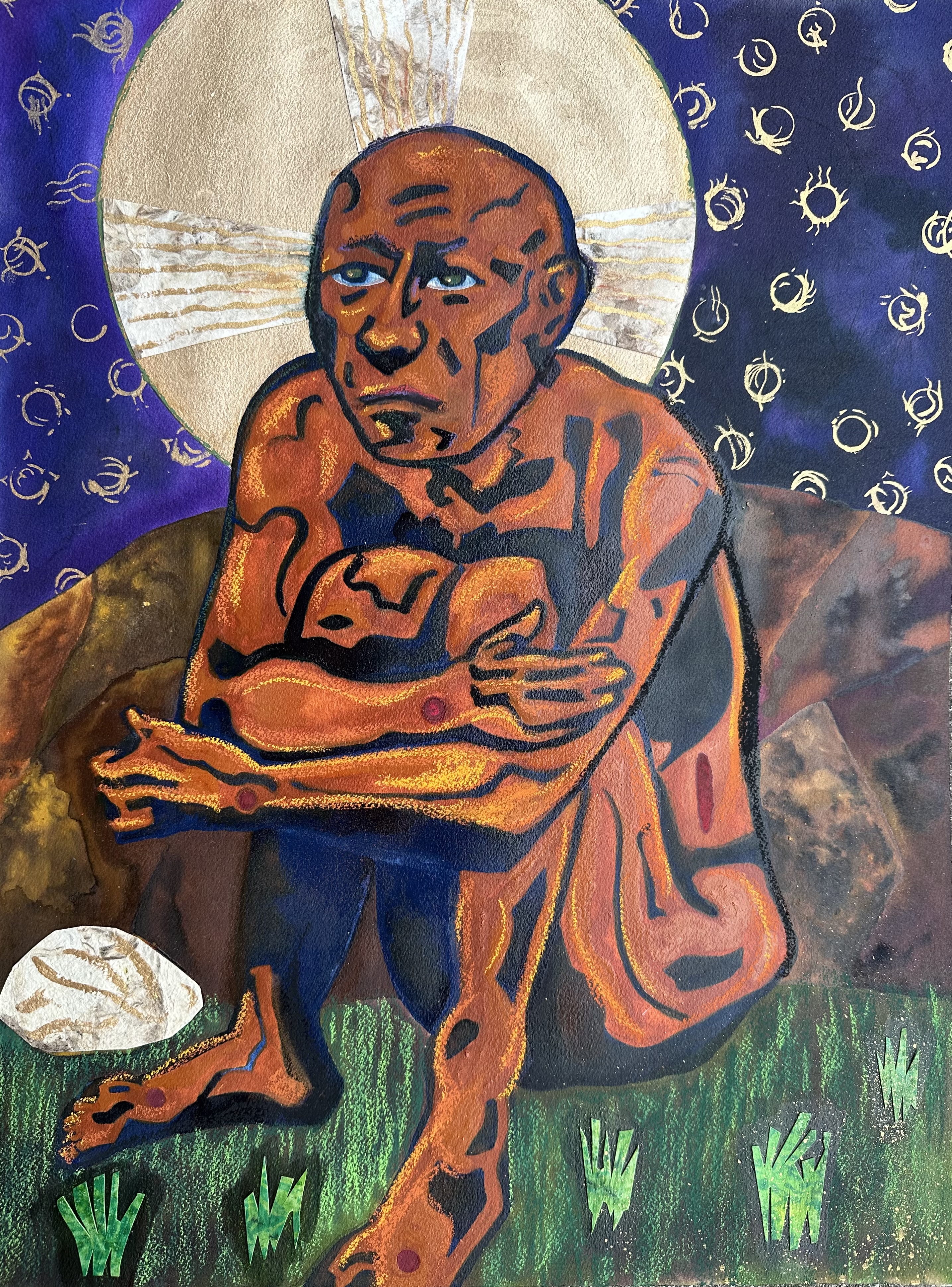
I’ve started working large, and taking days to make a painting. This is the first in a projected series of seven paintings that I hope to show at St. Stephen’s in Lent, 2027.
I make art and illuminated prayer books.
I’ve started working large, and taking days to make a painting. This is the first in a projected series of seven paintings that I hope to show at St. Stephen’s in Lent, 2027.
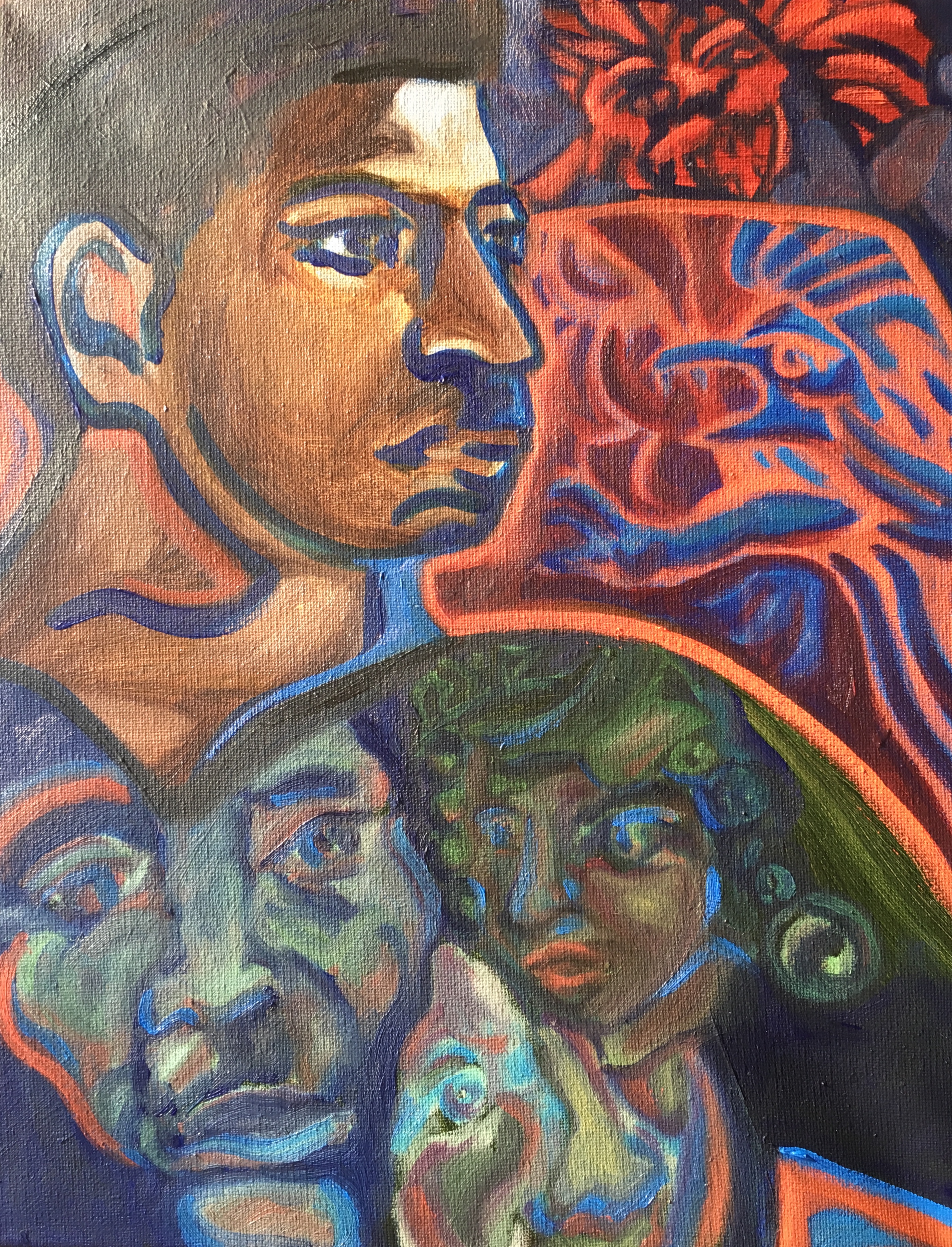
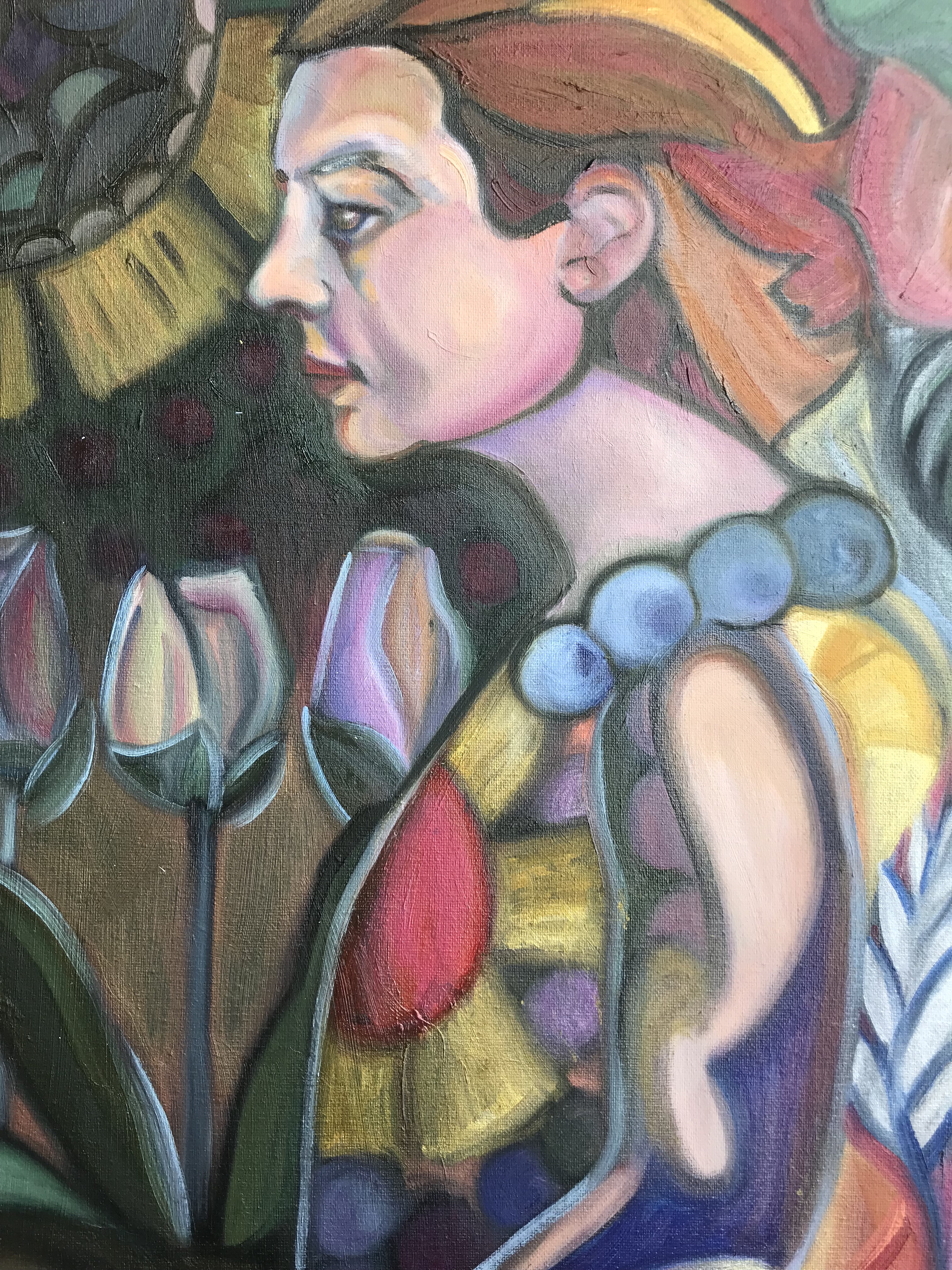 Just as the invocations that I’ve written are a kind of collage, the paintings that I’ve made for this series have some aspect of collage about them as well. Nothing is cut out or added to this – it’s all oil on canvas. But the shapes, the forms, the colors, are gathered from the things I’ve seen this spring on my morning walks, from doodles in old sketchbooks, from canvases that I started in life drawing and painting class. I’ve been pairing old poetry invocations to them, so I suppose that’s part of the collage as well. Here’s a written invocation to go with the painted one:
I praise you for the strength of trees,
full enough now that the sidewalk
remains dry beneath them,
and for the fast and slow energy of colors,
the faces of flowers, the moderation of green.
For lichen scattered like pigmented dust,
for the gray veins of root systems
in washed away dirt,
for earth.
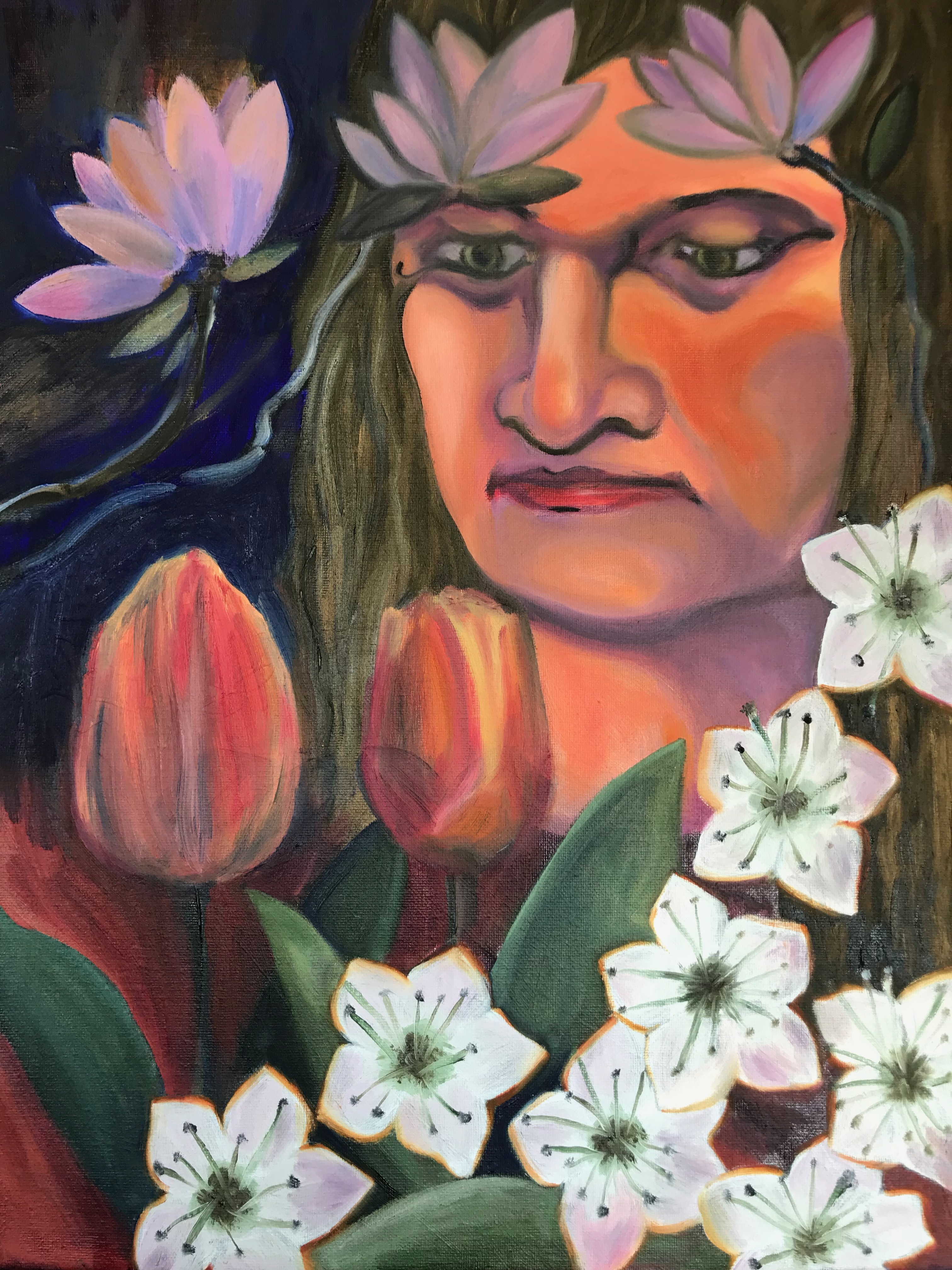
I’m part of a group show that will be opening at Saint Philip’s Episcopal Church in Columbus, OH on May 19th. We drew on William Blake’s poem “Pentecost” for the theme and title of the show, which we’re calling Unless the heart catch fire.
Playing with that theme, I thought about the many morning walks that I take through my neighborhood. I practice mindfulness as I walk, and often try to form prayers from the things that I see – a kind of spiritual collage. For awhile I’ve called these prayers invocations, since they’re mostly about naming the ways in which I see God’s activity in the world. As I prepared for the upcoming show, I thought about how images could be invocations, too. Here’s the first of them, with more to follow.
Mark 1:21-28, a retelling
They walked between the olive trees along the lake to the small fishing village of Capernaum, and on the sabbath Jesus entered the synagogue and taught. The people were astonished, because he didn’t teach like the scribes, who thought that the rules which they tediously parsed were all that God had to say to humanity. He taught with authority. A man in the synagogue, who’s spirit was muddled by a thousand things and who was stretched and scratched inside by tearing claws, cried out “What have you to do with us, Jesus of Nazareth? Have you come to destroy us? I know who you are, the Holy One of God.” Jesus spoke directly to the man’s spiritual state: “Be silent! Set this man free!” And the man convulsed and cried out, and all of the jangling brokenness inside of him gathered itself up and came out of him. The synagogue filled with babbling voices – they echoed off of the walls – “What is this?” “A new teaching, with authority!” “He commands even the unclean spirits, and they obey him!” His fame began to spread around the circle of the lake, where the sun beat down and anemones bloomed on the plains, and fishing boats sailed out on the deep blue of the water.
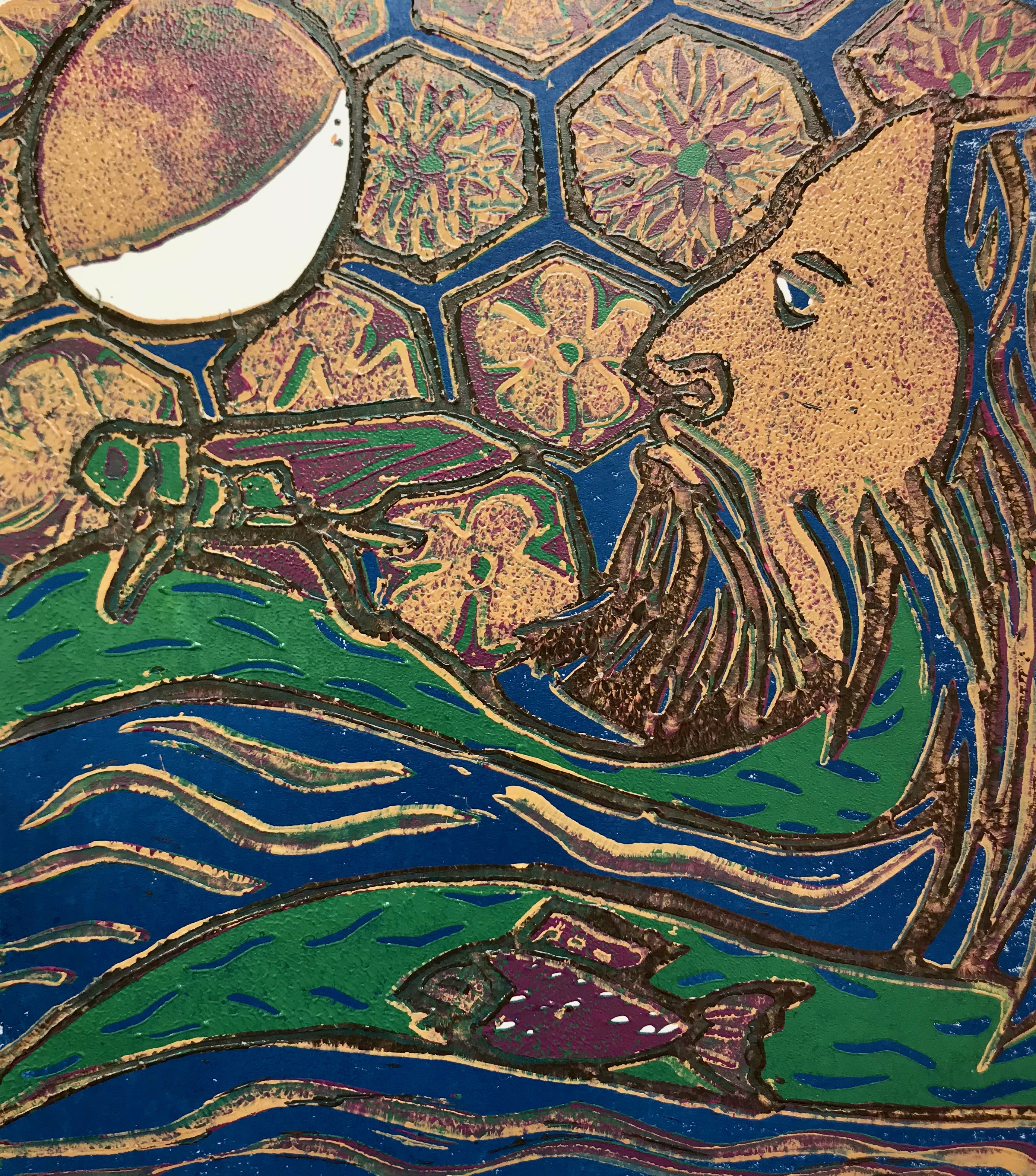 Caption: St. John in the Wilderness, linoleum block print
I’ve been reading Anselm’s Prayer to Saint John the Baptist and working on several pieces that are about John. Anselm’s poem is a long, heart-rending cry as he looks deep inside himself and struggles with his own nature. He writes:
You refashioned your gracious image in me,
and I superimposed upon it the image that is hateful.
Alas, alas, how could I?
And, even more painfully,
If I look within myself, I cannot bear myself;
if I do not look within myself, I do not know myself.
The poem quickly moves from a reflection on John to a reflection on the soul. This seems strange at first, but I think that’s the point. John the Baptist wants us to repent – to reflect on ourselves so that we may change. And because such reflection is painful, what he’s really calling us into is the death of ego and a wilderness in which we are meant to wander for awhile, undefined. I, like Anselm, often want to resist this call.
http://www.powells.com/book/prayers-meditations-of-st-anselm-with-the-proslogion-9780140442786/1-9

