From the Dark Tower

“We shall not always plant while others reap.” This is the first line of Countee Cullen’s poem “From the Dark Tower.” I first read the poem last year, during the election and after having been active in the #BlackLivesMatter movement. Cullen wrote the poem at the height of the Harlem Renaissance in the 1920s. The Dark Tower itself was a building in Harlem where writers and intellectuals frequently met. As I read it, I wondered why it is that, ninety years later, the plaintive hope of the poem still seems so distant.

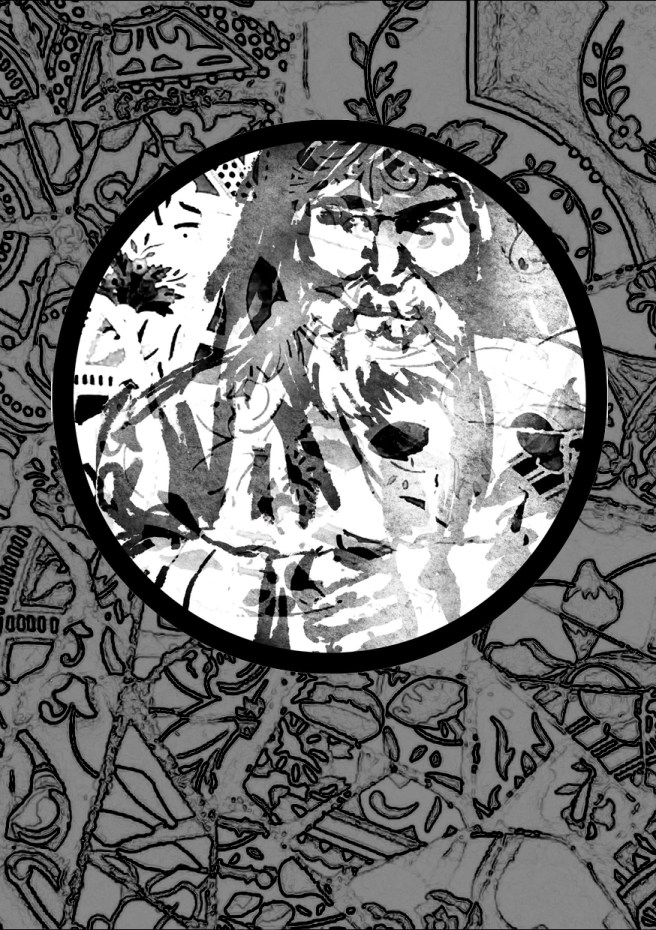
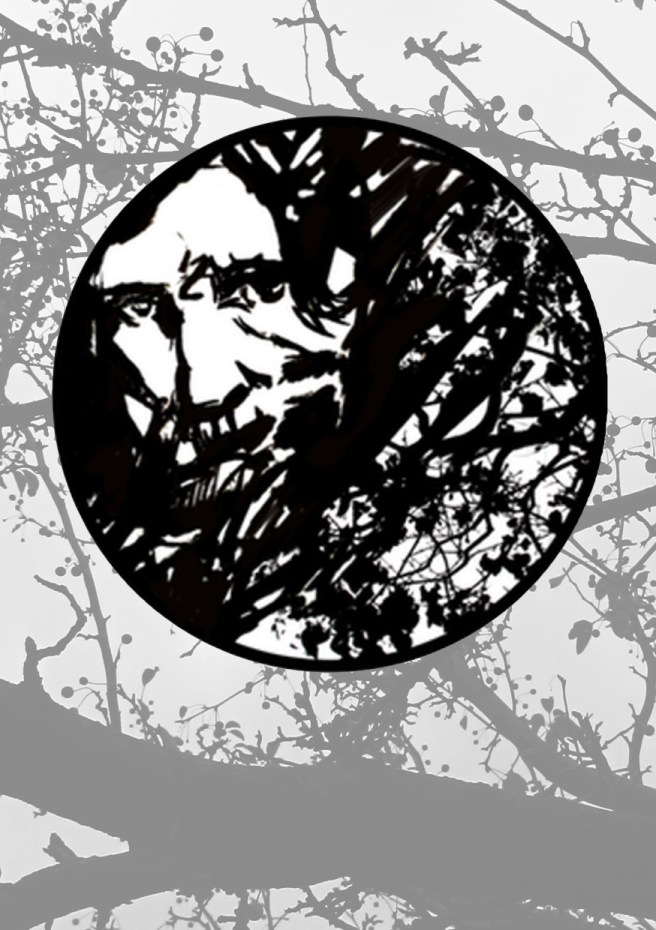
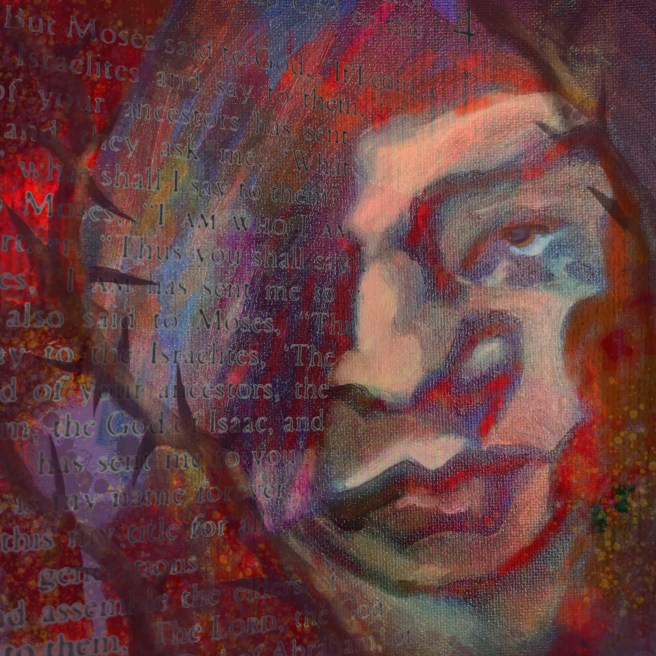
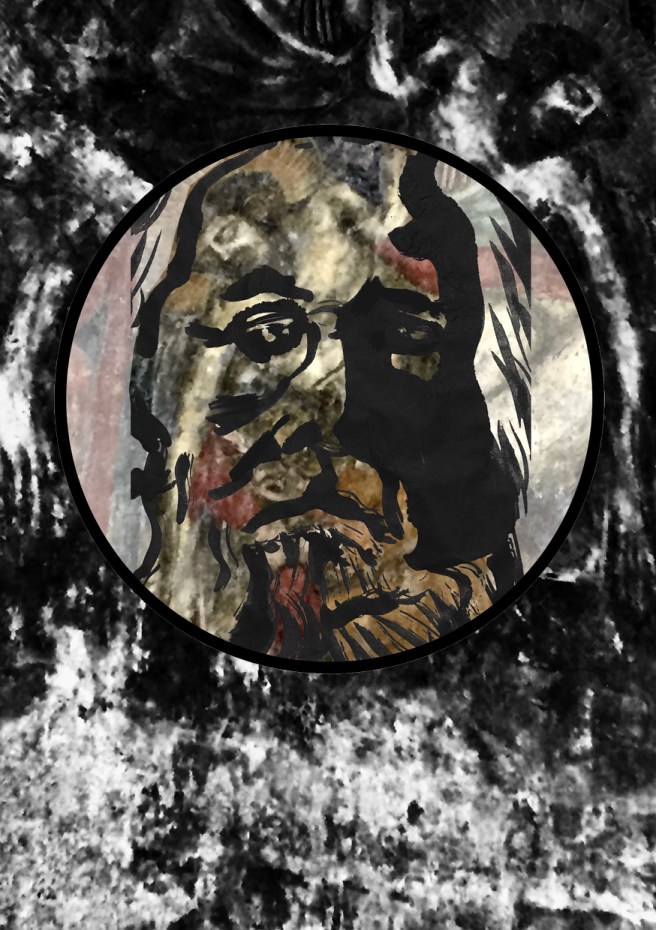
Cullen’s poem helps me remember, as I read the Book of Exodus, that the forty years the Israelites wandered in the wilderness is as nothing compared to the centuries that African-American people have been waiting for justice. Yet it’s the poem’s hope that most deeply effected me when I first read it. I made this image to reflect that hope, and the question that lingers behind the hope: how long must people wait for justice? In Cullen’s words, how long must people “wait, and tend our agonizing seeds”? Here’s the whole text of the poem:

From the Dark Tower

Countee Cullen

We shall not always plant while others reap
The golden increment of bursting fruit,
Not always countenance, abject and mute
That lesser men should hold their brothers cheap;
Not everlastingly while others sleep
Shall we beguile their limbs with mellow flute,
Not always bend to some more subtle brute;
We were not made eternally to weep.

The night whose sable breast relieves the stark
White stars is no less lovely being dark,
And there are buds that cannot bloom at all
In light, but crumple, piteous, and fall;
So in the dark we hide the heart that bleeds,
And wait, and tend our agonizing seeds.

The Christian Questions

When I was in my early thirties and recently ordained, I would meet retired priests at clergy conferences and they would tell me all of the things that they didn’t really believe. My sense was that they had never believed in the virgin birth or in substitutionary atonement, or hadn’t believed in those things for a long time, but they’d spent their lives proclaiming such doctrine from the pulpit anyway. It was only in retirement that they felt free to be honest. Before that, they’d felt a responsibility for the tradition that they had been ordained into, and they weren’t going to undermine that tradition, regardless of what they personally thought. I had some sympathy for these men (and they were all men), while at the same time resolving not to be like them. Back then, it was an easy resolution, because I was very orthodox and could honestly say that I did believe in the virgin birth, substitutionary atonement, and all the rest. And many of their objections felt like they came out of mid-20th century modernism, something that I, as a good post-modernist, had very little sympathy for.

I’m no longer so certain in my beliefs. My mother’s death has sent me wandering through an agnostic wilderness during the last ten months. I’ve been praying less, and when I do pray, I’m not really sure who I’m talking to. Yet, like many other people, I still consider myself a Christian. I don’t feel that my Christian identity is based in doctrine. But if it isn’t, what is it based in? An easy answer would be that it’s based in practice – I’m a Christian because I go to church and sometimes pray, and occasionally try to do good works in the world. But if practice is the standard, then I have to admit that, in this mourning season of my life, I’m not a very good Christian.

The one thing I continue to do with great regularity, that I can’t seem to stop doing, is question. I sit with friends over lunch and have long, rambling conversations about God. In this moment, I’m not a Christian because I accept the Christian answers, but because I can’t stop asking the Christian questions.

So what are the Christian questions? There are a great many, and I have only a partial list in my mind. But these are the questions that are most salient to me right now:

  • Is life more powerful than death? Is death real?
  • How do we reconcile suffering with joy?
  • How do we become a beautiful community, one that honors people’s weaknesses as well as their strengths?
  • What does it mean to be a disciple?
  • Should our emphasis be on imitating Jesus or loving Jesus?
  • Does God intervene in our lives?
  • What roles should joy and playfulness play in our faith lives?
  • How do we survive the absence of God as experienced on the cross and experienced in our own lives?
  • What is the best way to practice love of neighbor?
  • Is the body good or bad? Is sex good or bad?

I have no answers to these questions, but I want to ask them in the company of people who have spent a long time thinking and arguing about them. So I continue to go back to the places where these questions are raised, argued about, and left unresolved. Scripture is one such place, as is tradition, and history, and the current church. I’m not certain if this kind of questioning can really be called faith, but if belief simply means giving your heart to something, I’ve given my heart to these, and many more, questions. I believe in them.

Midwives

Birth has always been perilous. For most of our history, conceiving meant reconciling oneself with the possibility of death, even in the act of bringing forth new life. Death and life sat very close together on the birthing bed. Midwives, or wise women, would accompany women in labor into that liminal space between life and death, and would guide them through it with their rituals and plant lore and coaxing hands. They have always been the ones who ensured the human future.

The midwives in Exodus have names, Shiphrah and Puah. Pharaoh is known only by his position, not by his name. His dominance would suppress life and bring about death. He is the opposite of a midwife. When the midwives oppose him, it is life opposing death, the named and specific opposing the general and indifferent.

The spiritual life is about putting away the old and welcoming the new. It is about coming through death into new life. It is about discovering ourselves – finding our true names. And it is about standing with God in opposition to dominance and indifference. This is a journey we undertake many times. Again and again, old selves die so that new selves can be born. It is always perilous. And it is when we are faced with this peril that we might cry out for a midwife. We might hope for someone wise to come and aid us with rituals and lore and kindness.

What has died in you?  Do you feel the empty spaces where the dead thing used to be?

What has been trying to be born in you?  Are you struggling with a new birth of self?

Who are the midwives in your life right now?  Who is helping you?


Exodus: Beneath the Apple Trees

This year I will be joining my friends in the Diocese of Southern Ohio as we read the Book of Exodus together. Preparing for this, I’ve found myself dipping into Jewish midrash, especially the Shemot Rabbah, which, according to sefaria.org was composed in 1200 CE in Talmudic Israel/Babylon. I’m honestly not sure what that means. Was in composed in two places? Sefaria provides the text, but not much information about it, and I haven’t found more online. But while reading through it, I was struck by a beautiful story about the Hebrew women giving birth, a magical scene that has the logic and poetry of a fairy tale. I took some liberties in turning it into a poem. If you would like to read the original, you can find it on Sefaria at this address. Here’s my poem:

When the Israelite women conceived
they gave birth under apple trees,
where, loved by the divine, light woke them.

Angels came and cleansed them,
with water bright with apple seeds,
and white blossoms, softly fallen, were their altar.

When the Egyptian masters learned
of these birth rites of the chosen
they came into the apple groves with long knives to kill them.

But angels made the earth a womb,
and placed the children in it, and oxen
plowed the sheltering ground, ensuring it was innocent.

When the killers went away again the children,
born like grass again, rose from mud and bracken,
a generation that peeled the eye, and saw the red sea broken.

Now bring us light and empty us, and bury us like seeds
protect us in our innocence with love beneath the apple trees,
and when we wake from death again, ensure that we can see.

The Eternal Now

One summer, I disciplined myself to take walks like “Eyes” does. I paused to look at the patterns and shapes of flowers, the stippling of color along their petals, the bend of their long stems. I opened myself to the silhouetted patterns of leaves against the sky as the buds unfurled and the sunlight grew in strength from April to late August. When it rained, I stood over the puddles and studied my muted reflection, broken by the impact of drops and the ridges of ripples. One day, coming back home, I looked at the dirt and bracken beaten down around the edges of a parking lot, and I thought, “this is the only time I’ll see this with these eyes, see this particular pattern of twigs and trash and stones. They’ll never be in this exact pattern again, the sun will never slant onto them in exactly this way, I’ll never again find the posture and the position of my body that allows me to see how dark and hard their shadows are.” Everything is ephemeral, and I felt very grateful to God for being in each and every moment, for abiding in the eternity that these passing things have a permanent home in. They exist here only moment by moment. With God, they exist forever.

That Autumn, my mother died. She was in the ICU for a month, and day after day my father and I were with her, in among the tubes and trays and beeping machines. At first I kept to the disciplines that had filled my summer with such a feeing of grace. I quieted my breath, paid attention to my body, felt how my emotions played themselves out in my stomach and shoulders. I was a spiritual warrior, an unassailable castle, and I would agree to listen to grief and learn from it, but it wouldn’t break me. Three days before she died, my daughter and I went to see Arrival, the science fiction movie starring Amy Adams. The movie begins with a death, the death of her daughter, but is really about time and eternity. The aliens experience time differently, and their language reflects an understanding of the eternal now. My daughter and I left the theater with our hearts in our throats. The hospital was on the other side of the highway, and the tower where my mother lay was visible from the theater’s parking lot. I checked my phone and saw, miracle beyond miracles, that she had come out of her coma, and we drove to the hospital and found her sitting up in bed, her eyes open, mouthing words around the tube that snaked down her throat and into her lungs. We told her how much we loved her, tried to explain what had happened to her. She tried to write us a note with her swollen hands, an illegible scrawl. But it didn’t matter. She was getting better. Soon we’d get to talk to her, to sit with her at the dinner table, to watch her age with grace and, eventually, far into the future, die with dignity.

The next day she had slipped back into a coma, and my brothers were summoned from California to be there at her death bed. In the following months, as grief took hold of me and all of my disciplines fell away, my daughter would talk about time. She said that she didn’t necessarily believe in life after death, but she did believe that all time was the same in the eyes of God. With God, all things are eternally alive, in all of their different moments of existence. My infant mother was with God in the eternal now, and my dying mother was with God in the eternal now. And each moment of my own life, and my daughter’s life, will continually exist in God until the end of time. That is what is meant by God’s eternity.

To walk like Eyes, to be aware, to perceive, is more than a pleasant past time, more than a spiritual discipline that makes one aware of mystery and beauty and fills one with gratitude. To walk like Eyes is to touch God’s eternity, to see the incredible preciousness of each passing thing and to know that it really isn’t passing, but eternal. After her sister died, the artist Lori Esposito embarked on a series of “grief walks.” She would place water and dye on a porcelain plate and walk with it until the water had evaporated and a pattern of dye was dried to the plate. If the weather was humid, these walks would take hours – if it was arid, they would be quick. She walked in all weather. I walked with her once, and stared down at the crystalline patters of dye that rimed the edges of the plate where the water had splashed, and at the diminishing pool of tint in the plate’s center, the way it dried in waves, lapped like the patterns of tide on a beach. I breathed and moved my body and concentrated on the plate. Lori was teaching me to understand and participate in grief by understanding and participating in the now. Because it’s in the now that all things are returned to us. It’s in the now that the world is restored.