
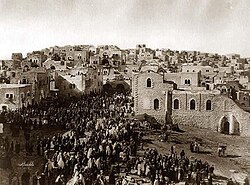
Now this world’s mind
finds the strangeness of angels
and the snow, trampled in the streets,
relearns the clarity of the sky.
Stars flame in plates of food,
and the claims of bodies,
abused by years of walking,
scarred from work, are made good.
The whole town is angel-dressed,
and all the people are astounded.
Each neighbor wears a different face,
each is arrayed in startling clothes.
Choirs sing from a cow’s dull chewing,
an ox stamps the ground
with a rhythm that only God knows.
We are matter, living selves, really here.
Yet the infant in the manger
brings the angels near.
They are stranger than we hoped,
they stare with many eyes
and roiling galaxies drape their mouths.
The universe astounds with its complexities.
Language abandons all words of praise.
Fall on your knees!
A star explodes where the baby lays,
a Word is summoned through his sleeping form.
The world will never be the same.
We learn to cry like angels.
We learn a new silence.
We adore.
Illumination
John’s Gospel speaks of the incarnation without ever mentioning the manger, the baby in swaddling clothes, the cows and donkeys, the shepherds, the adoring mother and father. God comes into the world as a Word, and although John speaks of flesh, he offers no specificity, as if flesh and language are both equally abstract. No nativity scene can capture his conceptualizations. If we were to follow John’s descriptions and try to put something in the bed of straw in a carefully carved creche, we would quickly realize the limits of our imagination. What small wooden carving or porcelain figurine could represent a word, a light, fleshiness in its pure and unsullied form?
John is referencing the first creation story in Genesis. Again and again, God uses words to create order out of chaos. John would like Jesus to be that chaos denying utterance. Jesus might be a riverbank that holds in the flood waters, a house that remains standing after an earthquake. He might be a ritual, or a harvest season, or a covenant. His flesh comes to represent whatever might help to keep the terrors at bay, whatever gives us a sense of rest and peace. The manger becomes the world, its comforts extended into any setting.
Yet it’s never domesticated comfort. Strangeness is always part of the sense of order. The angels, the seraphim and the cherubim, are composite creatures. Their six wings, their incandescence, their many faces, their wheeling eyes, all contain features from a multitude of beings. If the Word is austere in its abstraction, the angels are lush with description. Both angelic multiplicity and a simplicity that is near to emptiness are used to describe the divine incursion into creation.
A true manger scene might require that we allow the weird into our understanding of the incarnation. Even words will fail eventually. There is something ineffable in the experiences of the people and animals that gathered in the stable. How often we forget their astonishment. How often we forget that they lose themselves in wonder, that they enter states of ecstasy.
 KPB Stevens